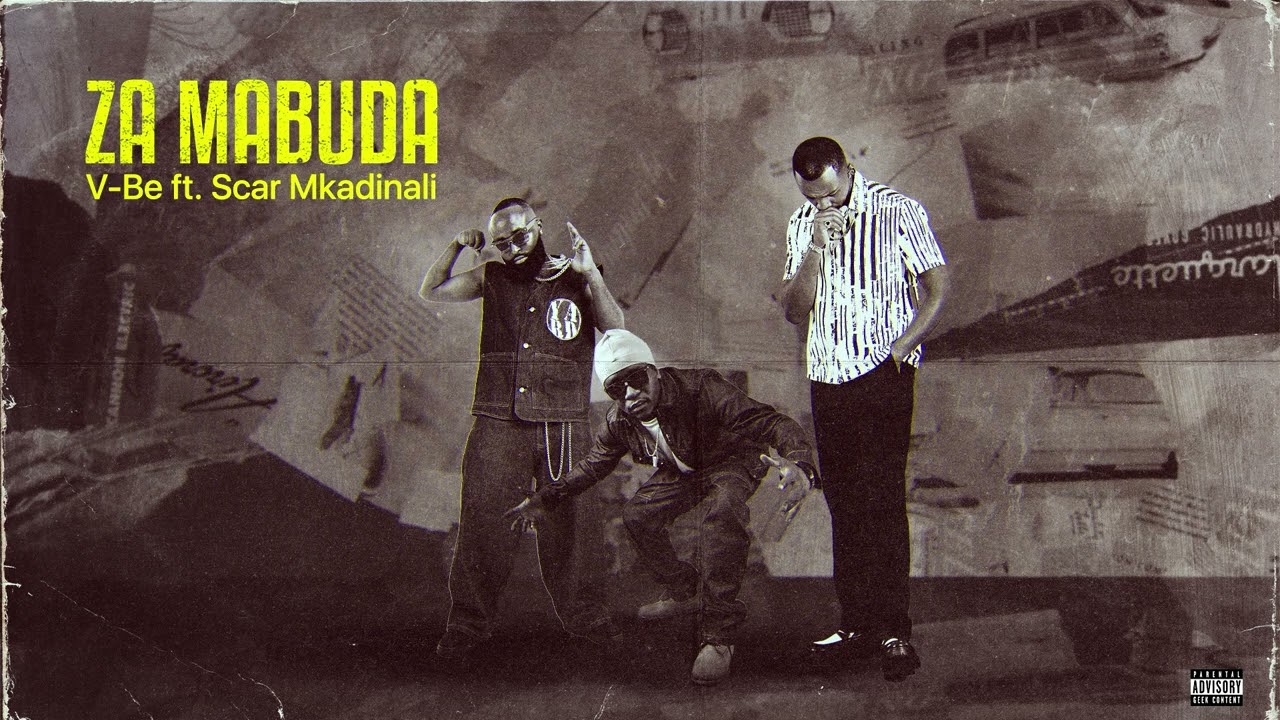
V-Be opens ‘Za Mabuda’ single from a place of calm authority, setting the tone for a record built on restraint, confidence, and lived success. The song introduces itself without urgency or excess, immediately communicating its central message: when achievement is real, silence becomes the loudest response.
From the first moments, ‘Za Mabuda’ positions itself as a statement rather than a performance.
The track revolves around authenticity and status, drawing a clear line between people who live the life and those who only talk about it. Throughout the song, success is presented as something proven through action, not explanation. There’s a recurring refusal to entertain unnecessary questions or doubt, reinforcing the idea that real power doesn’t require validation.
V-Be’s delivery is composed and deliberate, providing the melodic backbone that carries the song’s message with confidence. His approach feels controlled and intentional, emphasizing clarity over exaggeration. When Scar Mkadinali enters, he sharpens the record with a direct, hard-hitting presence that adds weight without disrupting the balance. His verses reinforce the song’s stance, cutting through pretence with precision rather than volume.
Production plays a critical role in shaping the song’s identity. The instrumental is clean and disciplined, avoiding unnecessary layers while giving the vocals space to command attention. The restrained production mirrors the song’s theme—nothing is overdone, and every element serves a purpose, making the message land with greater impact.
Za Mabuda works as both a declaration and a dismissal. It celebrates progress without boasting and rejects noise without explanation. For listeners who’ve reached a point where results speak for themselves, the song feels less like a warning and more like confirmation.
Also read: Scar Mkadinali is the only rapper featured on Bien’s debut studio album ‘Alusa Why Are You Topless?’
Stream the official release of ‘Za Mabuda’ as performed by V-Be and Scar Mkadinali, written by Philip Munyao Mutuku, Dennis Njoroge Wambui, and Churchill Mandela, and produced by Ares66, who also handled the mixing and mastering.