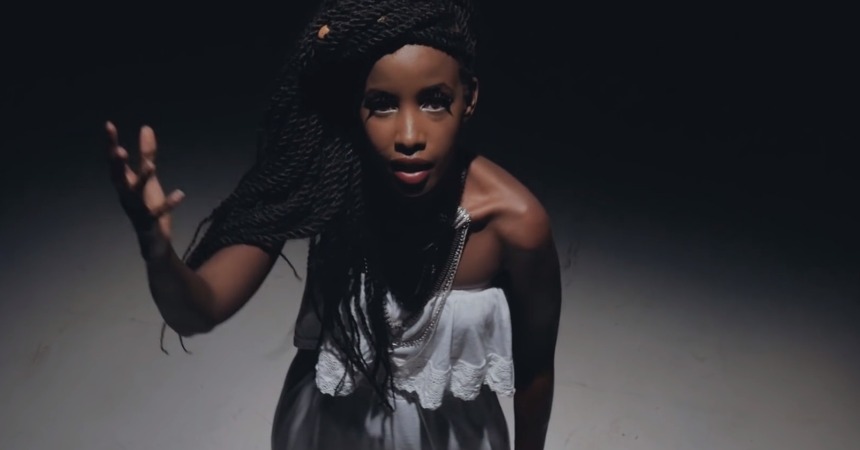

Coster Ojwang’ is one of the most quietly powerful success stories in Kenya’s creative scene today. A singer-songwriter, multi-instrumentalist, and visual artist(yes, he can actually draw), his rise has not been driven by hype or gimmicks, but by consistency, cultural grounding, and a deeply personal artistic vision. What once felt like an underground movement has now grown into a national—and increasingly international—conversation.
Born and raised in Anding’o, Migori County, Coster’s creative identity is inseparable from his upbringing. Raised by his grandmother, he grew up immersed in Luo oral traditions, music, and communal life along the shores of Lake Victoria. These early experiences shaped his sense of rhythm, storytelling, and symbolism, elements that would later become central to both his music and visual art. Long before microphones and stages, he learned the power of memory, repetition, and meaning.
His first formal artistic training was not in music but in visual art. Coster studied at Mwangaza Art School in Kisumu before relocating to Nairobi around 2015. In the capital, he initially built a name as a contemporary impressionist painter, creating bold, emotive works that depicted African life, migration, labour, and identity. His paintings were exhibited locally and internationally, including in Europe, Australia, and the United States, establishing him as a serious multidisciplinary artist even before his music gained traction.
Music came later, and deliberately so. Coster’s early releases emerged around 2020, during a period when many artists were chasing fast digital success. Instead, he took a slower, more introspective route. His debut project, Tales of the Fisherman (2021), became a defining moment—not because it was loud, but because it was honest. Drawing heavily from Luo rhythms, folk melodies, and Afro-soul, the project positioned him as a storyteller first and a performer second. The (Jalupo) fisherman metaphor became central to his identity, symbolising patience, labour, survival, and faith.
What distinguishes Coster Ojwang’ musically is his refusal to dilute his roots for accessibility. Much of his music is sung in Dholuo, yet it resonates strongly with audiences across Kenya and beyond, including listeners who do not understand the language. Songs like ‘Nyakachieng’, ‘Ting’amalo’, ‘Wabiro’, and ‘Oguyo Oguyo’ connect through mood, melody, and emotion rather than translation. His work proves that authenticity can be more universal than trend-driven pop formulas.
As his catalogue grew, so did his audience. Subsequent projects such as Fweny and ISNM (Impostor Syndrome No More) revealed an artist becoming more confident, more experimental, and more self-aware. His songwriting matured, addressing themes of self-doubt, purpose, memory, love, and belonging. This creative evolution set the stage for his most recent body of work, Mbak Ndalo.
Mbak Ndalo
Released as a studio EP, Mbak Ndalo—loosely translated as Tales of Days—marks a deeply reflective chapter in Coster Ojwang’s journey. The project leans into memory, time, and lived experience, blending Luo musical foundations with layered, contemporary production.
Each track feels like a journal entry, capturing fleeting moments, emotional reckonings, and personal revelations. It is a sonically rich and thematically cohesive project, making it an ideal entry point for new listeners and a rewarding listen for long-time fans.
The EP’s intimate yet expansive soundscape reflects an artist fully in control of his voice, and it stands as a natural evolution of the fisherman narrative that has defined his work so far.
Stream the studio project right below on your favorite DSP;
A significant turning point in his career came in 2025 when he signed a three-year publishing deal with Sol Generation, one of Kenya’s most influential creative powerhouses. The deal was widely seen as industry validation, placing him among artists considered culturally relevant, globally viable, and creatively disciplined. Around the same period, his involvement with the Kodong Klan collective further positioned him within a broader movement of artists redefining African sound through collaboration and heritage.
Also read: Mbak Ndalo confirms Coster Ojwang as a musical force to reckon with
Live performance has also played a key role in his rise because he’s a bona fide performing artist. Coster’s shows are immersive experiences, often blending live instrumentation, visual art aesthetics, and carefully curated storytelling.
His performances at major cultural festivals and high-profile concerts—including sharing a lineup with international acts—have introduced him to wider audiences while reinforcing his reputation as a thoughtful, intentional performer.
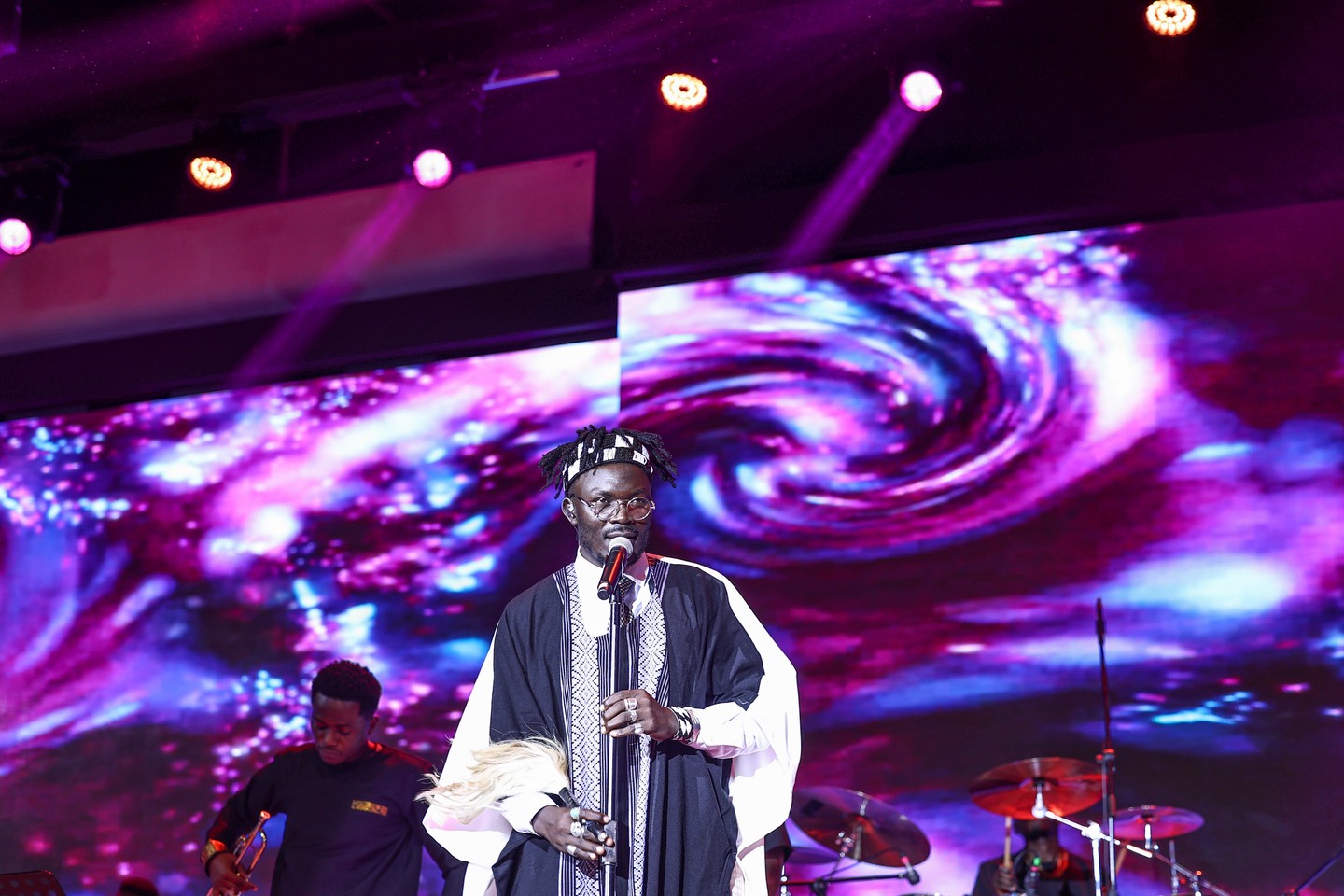
Beyond music, his multidisciplinary approach distinguishes him. Coster does not treat music, art, fashion, or imagery as separate expressions. Instead, they form a single creative language. His album covers, stage outfits, and music videos are all extensions of the same worldview—one rooted in African memory, labour, and beauty. This cohesion has helped him build a strong, recognisable identity in an era where many artists struggle to stand out.
So why is Coster Ojwang’ blowing up now? Because his moment aligns with a cultural shift. Kenyan audiences are increasingly embracing vernacular music, introspective songwriting, and artists who reflect lived experience rather than manufactured celebrity. Coster represents a generation that is unafraid to look inward, to honour where it comes from, and to move forward without erasing the past.
His growth has been organic, his audience earned, and his artistry intentional. Coster Ojwang’ is not just riding a wave—he is part of a deeper movement reshaping how African music is created, consumed, and valued. That is why his rise feels inevitable, and why his story is only just beginning.