
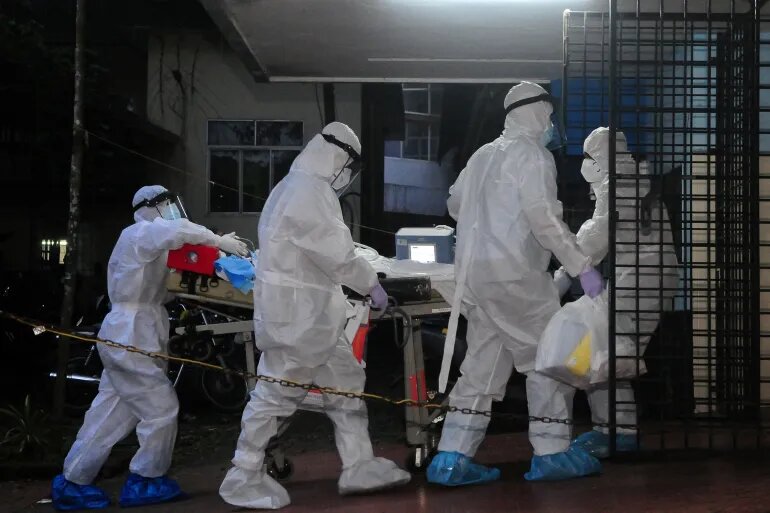
Health authorities across the globe are on high alert as the Nipah virus, one of the world’s most lethal pathogens, begins to show signs of a major epidemic.
Cases of the Nipah virus were first reported in India’s eastern state of West Bengal, heightening concerns in China and several Southeast Asian countries.
The outbreak prompted concerned countries to tighten health screening operations at airports as millions prepare to travel for the Lunar New Year holiday.
Since December 2025, two confirmed cases of the virus have been reported in West Bengal, India’s health ministry said on January 28, 2026.
While the world is still reeling from the scars of previous pandemics, Nipah presents a terrifyingly different challenge: a death rate that makes COVID-19 look mild.
With no vaccine and no specific treatment available, the virus is currently designated by the WHO as a “priority pathogen” with epidemic potential.
Below are the 5 things to know about Nipah virus:
1. It originates from fruit bats
The primary “reservoir” for the virus is the Pteropus fruit bat.
Humans can become infected by eating fruit contaminated with bat saliva or urine (such as raw date palm juice) or through direct contact with infected pigs or other humans.
2. It attacks the brain
Unlike many respiratory viruses, Nipah is known for causing acute encephalitis.
Patients often experience drowsiness, disorientation, and mental confusion, which can rapidly progress to a coma within 24 to 48 hours.
3. The mortality rate is terrifying
Public health experts warn that the case fatality rate is estimated at 40% to 75%.
This means that in some outbreaks, three out of every four people infected do not survive.
4. There is no vaccine
As of January 2026, there is no approved vaccine or drug specifically for Nipah virus infection.
Treatment is limited to “supportive care” to manage the severe respiratory and neurological symptoms.
5. Human-to-human transmission is real
Historically, Nipah was thought to require animal contact.
However, recent outbreaks have confirmed that the virus can spread directly from person to person, raising the risk of a fast-moving global event if it reaches major travel hubs.